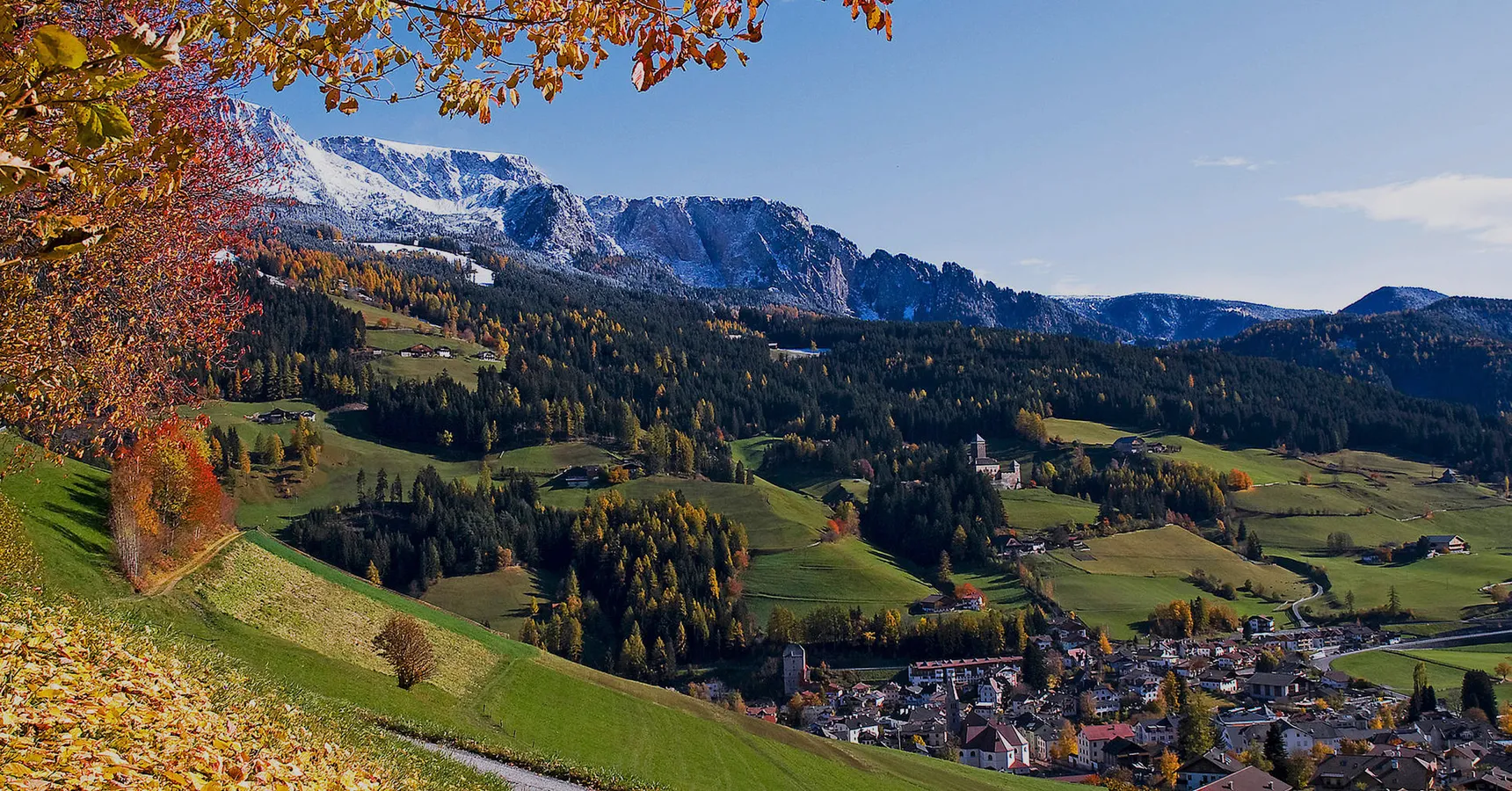
Autumn village in valley with colorful foliage and snow-capped mountains, scenic panorama
The Sarntal

Culture & customs in the Sarntal

The Sarntal, just a few kilometres north of Bolzano, is regarded as one of South Tyrol's most unspoilt valleys. It stretches around 50 kilometres from the provincial capital up to the Penser Joch pass and is surrounded by the imposing Sarntal Alps. Around 7,000 people live here, embedded in an alpine cultural landscape shaped by farming tradition, genuine hospitality and living customs.

The people of the Sarntal are proud of their roots

… and you can feel it: at the village fair (Kirchtag), the ceremonial cattle drive down from the pastures, in traditional dress and music or in the local craftsmanship. Here, tradition has a firm place in everyday life. The unique blend of living culture, a deep bond with nature and a down-to-earth way of life makes the Sarntal a special place – unspoilt, genuine and full of heart.
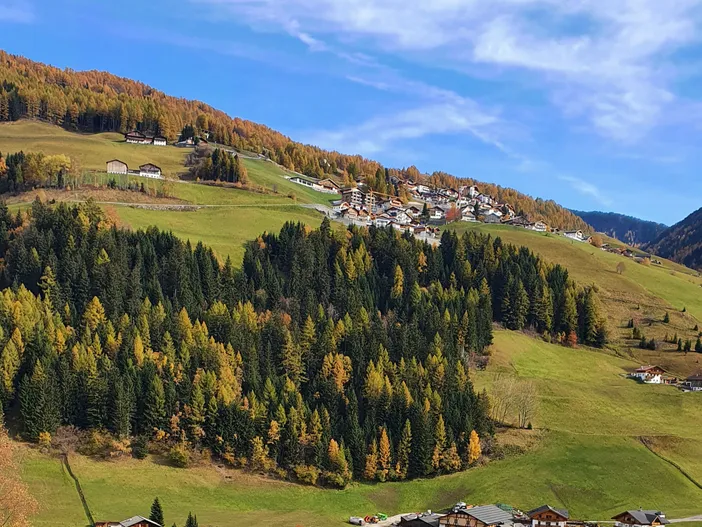
Autumn mountain village in Sarentino Valley with golden larches, green meadows and farmsteads

The Sarntal dialect (Sarner Dialekt)

The local vernacular of the Sarntal is considered one of South Tyrol's most archaic forms of speech: the valley's former isolation preserved many Middle High German elements. For the people of the Sarntal, their dialect is far more than a means of communication; it is an acoustic heritage that keeps the valley dwellers' distinctive and proud identity audible to this day.

The Sarntal mountain pine (Sarner Latsche)

On the rugged high reaches of the Sarntal Alps grows the hardy mountain pine, from whose needles traditional distilleries extract a precious essential oil. This "Tyrolean mountain blessing" oil has been valued in the Sarntal for generations as a home remedy for the airways and for easing the muscles, and its scent has become a signature of the entire region.

The Sarner Jangger (traditional knitted jacket)

This knitted jacket, deeply rooted in the Sarntal and made from pure, mostly undyed sheep's wool, is crafted using a special purl-purl technique that makes it especially windproof and long-lasting. In the valley, the "Jangger" is an indispensable companion both for everyday life on the farm and for festive occasions, and stands as a symbol of the union of function and tradition.

The Sarntal village fair (Sarner Kirchtag)

The first weekend of September turns the Sarntal into one vast festival ground, when the traditional church fair reaches its climax with the great procession on Sunday. It is the most important social event of the Sarntal year, when the village community parades its magnificent traditional costumes and gathers on "fair Monday" for the legendary cattle market.

Sarntal brass-band music (Sarner Blasmusik)

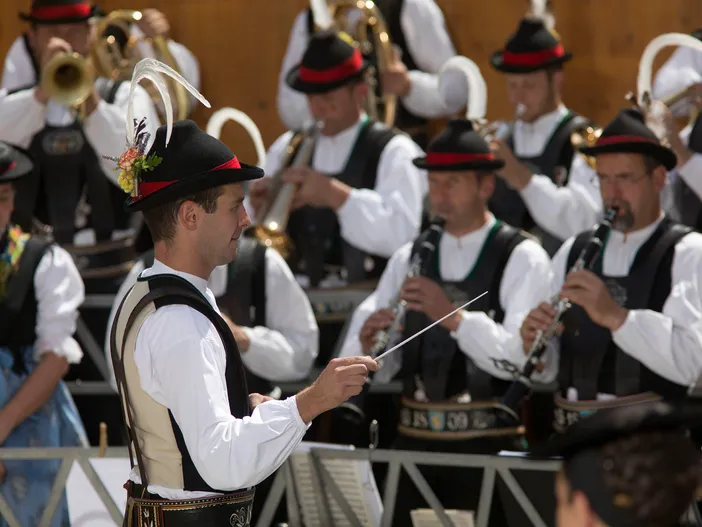
Thanks to their high musical quality and long history, the bands of the Sarntal enjoy an excellent reputation throughout the province. They are the cultural heart of every religious feast and secular procession, and in their proud traditional costumes the Sarntal musicians embody the harmonious interplay of discipline and custom.

Bandmaster in traditional dress conducts brass band at summer concert in Sarentino Valley

Alpine pasture life & cattle farming

For centuries, the wide high-altitude pastures of the Sarntal have formed the livelihood of the farming population and are the setting for a vibrant alpine economy. The breeding of noble Haflinger horses in particular, along with traditional cattle farming, shapes the summer scene on the mountains and ensures the preservation of the unique Sarntal cultural landscape.

Peacock-quill embroidery (Federkielstickerei)

The Sarntal is one of the last centres of this filigree craft, in which split peacock-feather quills are painstakingly embroidered into leather. Above all, the magnificent belts ("Ranzen") of the men's traditional costume are embellished in this way and are regarded in the valley as valuable status symbols, often passed down within the family over many generations.

Sarntal cuisine (Sarner Küche)

The cuisine of the Sarntal is marked by the simplicity and honesty of alpine mountain farming, with regional ingredients such as speck, rye flour and dairy products forming the base. Dishes like the Sarner Krapfen (local filled pastries) or the hearty barley soup reflect the history of a valley that learned to create delicious, nourishing food from a few high-quality resources.

"Sarnar Morgreti Essn" (a valley culinary initiative)

 This culinary initiative in the Sarntal puts the use of produce from the valley's own mountain farms at its heart and fosters cooperation between agriculture and gastronomy. It is a commitment to freshness and seasonality, through which guests can experience the unadulterated flavours of the valley in the form of traditionally prepared menus.

The Sarner Striezl (traditional yeast pastry)

This elongated yeast pastry, often filled with savoury speck or in a sweet variant, is the culinary classic of every Sarntal "Marende" (snack) or family celebration. The Striezl is a symbol of the valley's hospitality and is a must at any festive occasion, as it perfectly represents the baking tradition of the Sarntal farmwives.

The Rohrerhaus (farmhouse museum)

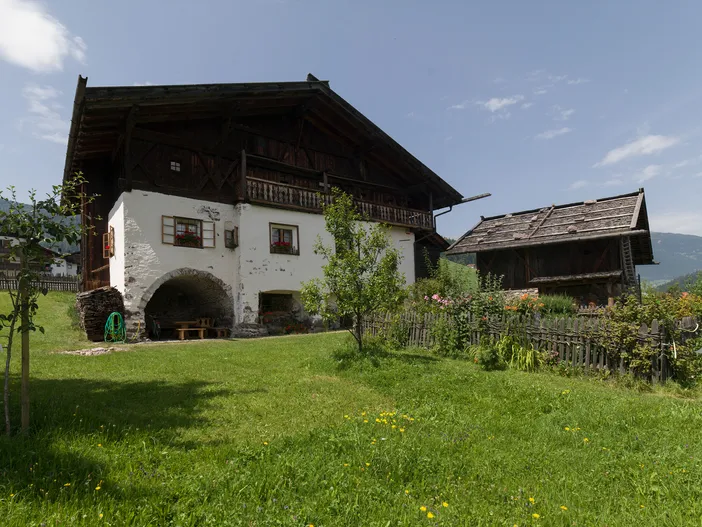
In this heritage-listed farmhouse in Sarnthein, the valley's history is presented in museum form and brought to life for visitors. The Rohrerhaus preserves the historic architecture with its smoke kitchen ("Rauchkuchl") and old parlours, and today serves as a living venue for exhibitions and courses centred on Sarntal customs.

Historic South Tyrolean farmhouse in wood and stone with blooming farmhouse garden in summer

The Klöckeln (an Advent custom)

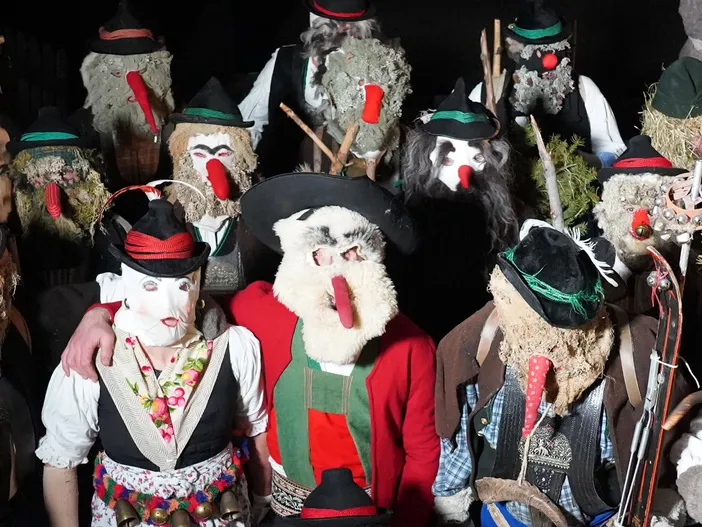
This Advent custom has survived in the Sarntal in a more original form than almost anywhere else in the Alpine region. On the three Thursdays before Christmas, masked groups move through the valley with their ritual chants to greet the light and ward off misfortune – a mystical spectacle that unites the deep faith and the world of legend of the Sarntal people.

Traditional Sarentino mask-wearers with handmade felt masks during winter folk customs

Alpenadvent Sarntal (alpine Christmas market)

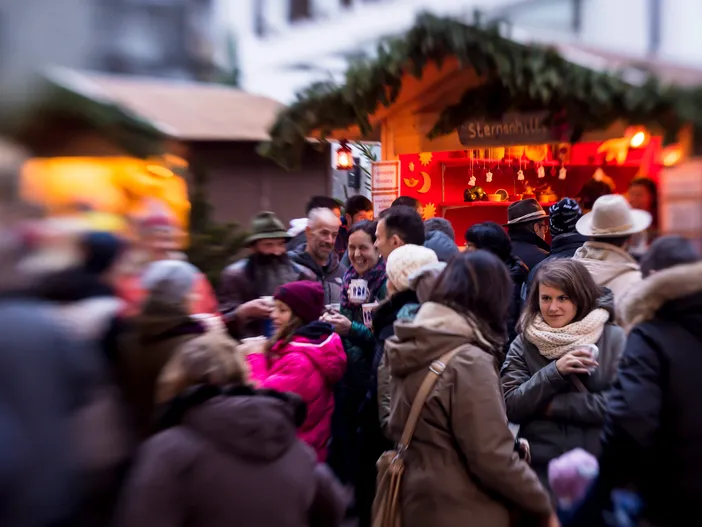
The Sarntal Christmas market deliberately sets itself apart from commercial markets through its contemplative atmosphere and its focus on genuine Sarntal craftsmanship. In the rustic wooden huts in Sarnthein, only handmade one-off pieces and local specialities are offered, making the "Alpenadvent" an authentic oasis of the pre-Christmas season.

Happy people with mulled wine at festively decorated Christmas market stand in twilight

Sarntal traditional dress (Sarner Tracht)

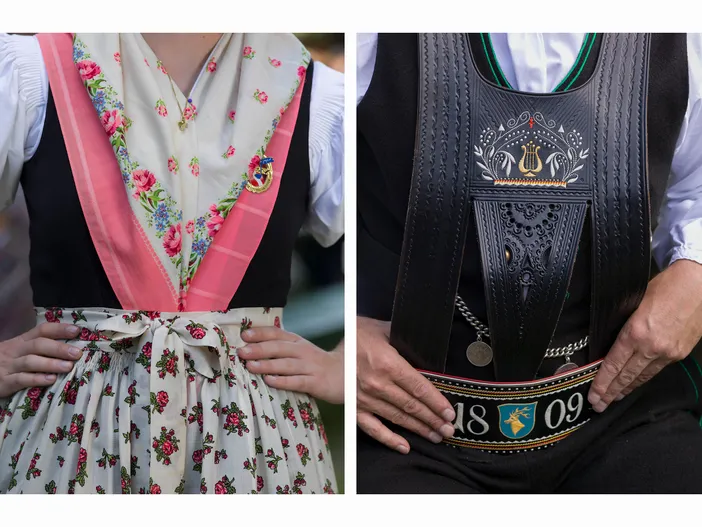
The traditional costume of the Sarntal is considered one of the finest and most detailed in South Tyrol and is worn with great pride by the valley's inhabitants at religious and secular festivals. Particularly striking are the artful embroideries which, depending on their design, reveal a great deal about marital status and origin within the valley.

Detail of South Tyrolean dress with floral scarf at neck and black leather belt

"Sarnar Virwitzmitte" (Sarntal curiosity & conviviality)

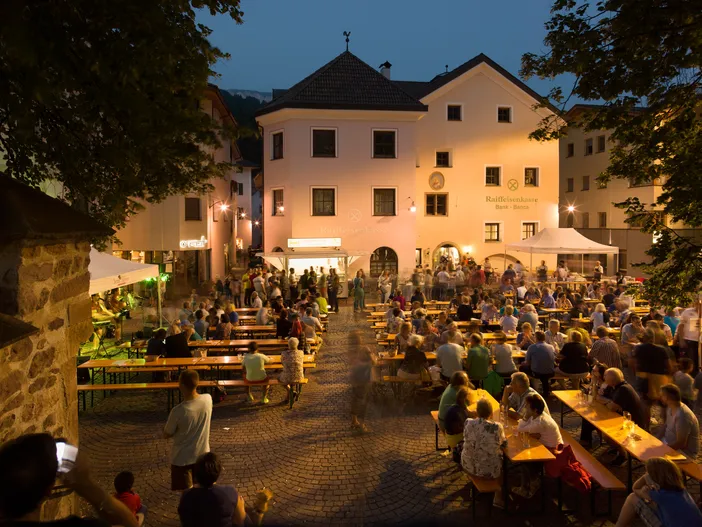
This term describes the typically Sarntal way of communicating, in which curiosity ("Virwitz") and sociable togetherness take centre stage. It is an expression of the lively village community, where people meet to exchange news and nurture the valley's social cohesion through conversation.

Lively village festival at Sarentino town square with beer benches and visitors on mild summer evening

"mirSarner" (a local collective brand)

Under this label, dedicated craftspeople, service providers and producers from the Sarntal have joined forces to make the quality and origin of their work visible. The "mirSarner" brand stands for sustainability, regional awareness and the pride of creating products straight from the heart of the valley for the wider world.

Sarntal craftsmanship (Sarner Handwerk)

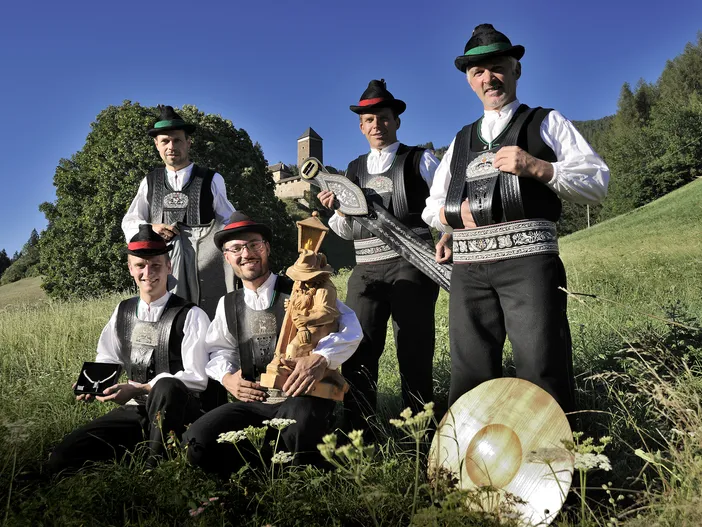
Craftsmanship in the Sarntal is characterised by enormous versatility, ranging from wood carving and weaving to leather working. The Sarntal artisans see themselves as keepers of old techniques, which they combine with modern design to secure the valley's economic strength and cultural substance for the future.

Men in traditional Sarentino dress with hat and wood carvings on summer alpine meadow

The Sarner Toppar (traditional loden slippers)

These traditional slippers are a prime example of sustainable use of leftover materials in the Sarntal and consist of several layers of fulled woollen cloth (loden). In elaborate handwork, the layers of fabric are placed on top of one another and firmly stitched together with countless stitches, giving the "Toppar" their characteristic sturdiness and insulating warmth. In the valley they are the embodiment of homely cosiness and are still made to measure today by skilled craftswomen, often worn for many years thanks to their durability.

Your room in the Sarntal

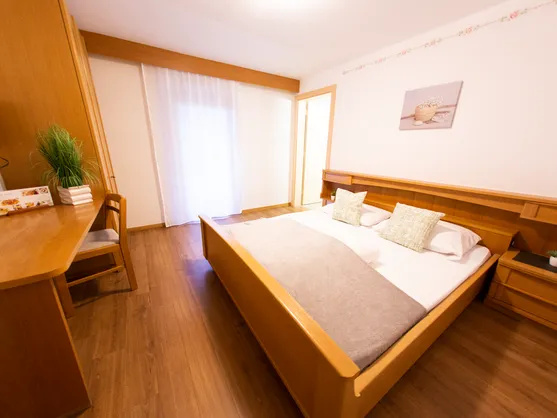
Cozy double room with light wood bed, desk, TV and laminate flooring

Double Room Durnholz

17-20 m²
 | 
for 1-2 people
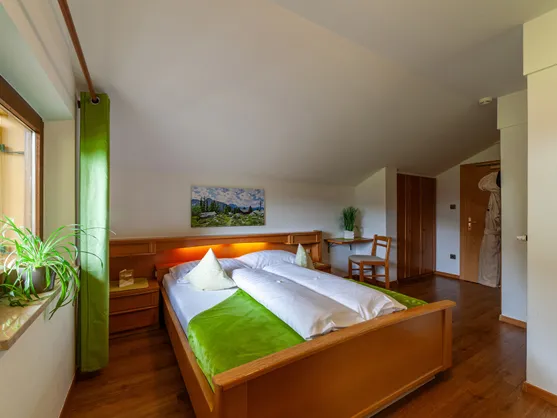
Cozy attic room with wood bed, bathrobe and alpine mountain hut motif

Double Room Reinswald

20-23 m²
 | 
for 1-3 people